
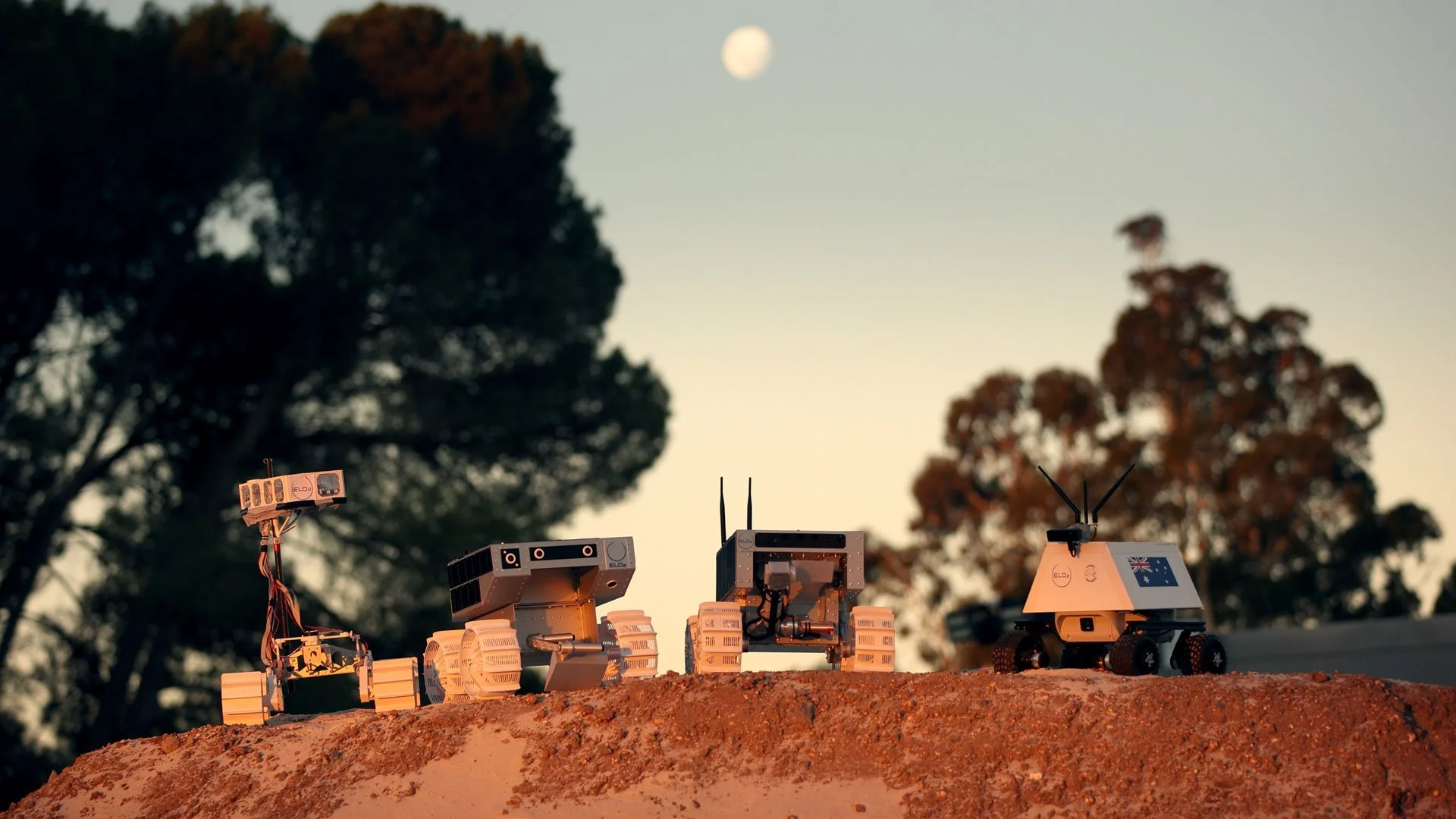
ABOUT ROO-VER
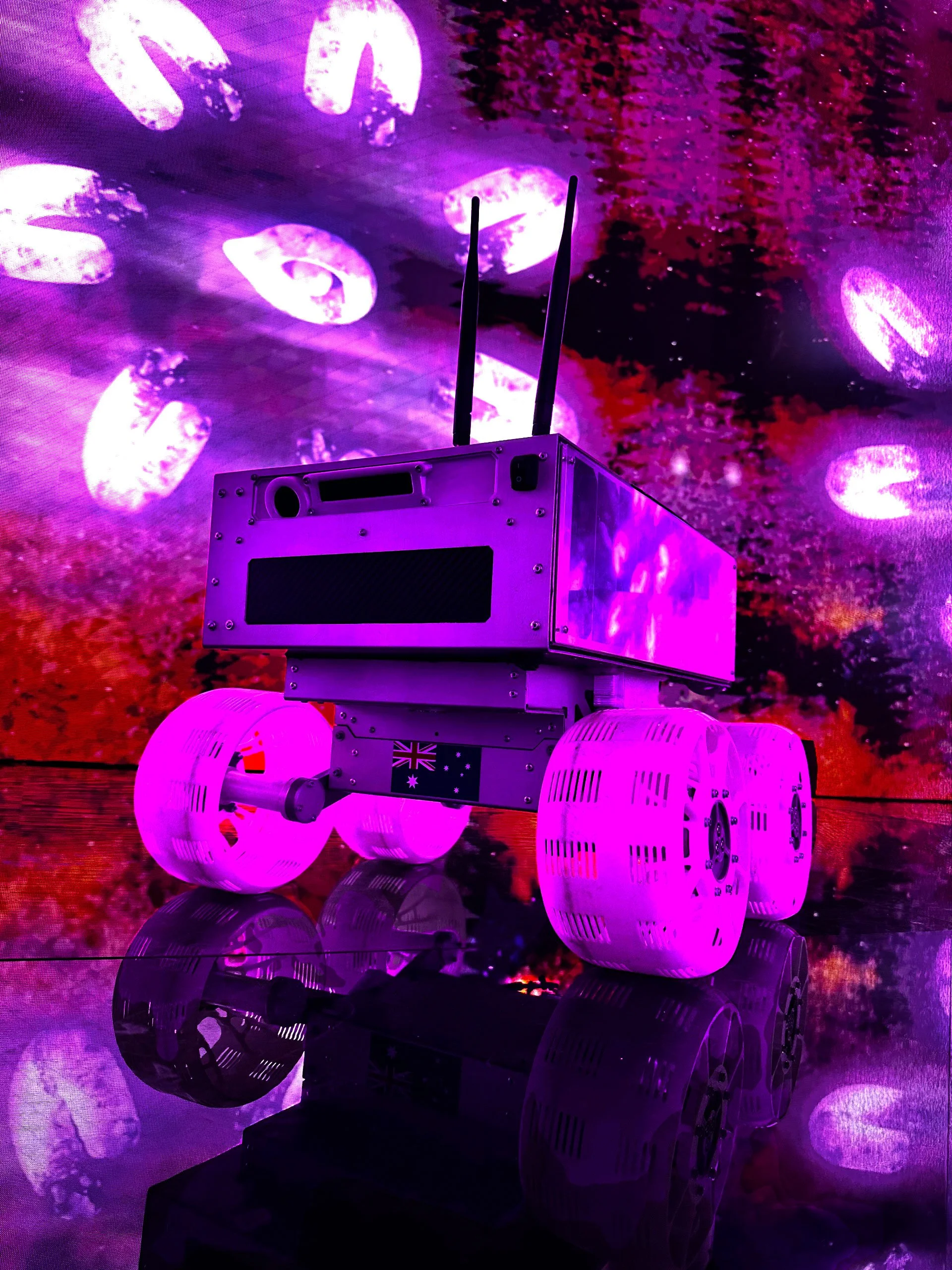
Meet ROO-VER
ROO-VER is the name of Australia’s history making rover. ROO-VER is likely to land in the South Pole region of the Moon and is expected to operate for 14 Earth days. That’s only about half of one Moon day.
ROO-VER is part of a bold national effort to explore space, build sovereign capability and inspire the next generation, all from right here in Australia. It is being built by the ELO2 Consortium, which is co-led by EPE Oceania and Lunar Outpost Oceania.

Why ROO-VER?
The Australian public chose the name, after a competition that saw more than 8000 entries.

How big is
ROO-VER?
ROO-VER weighs 20kg
and is about the size
of a suitcase.
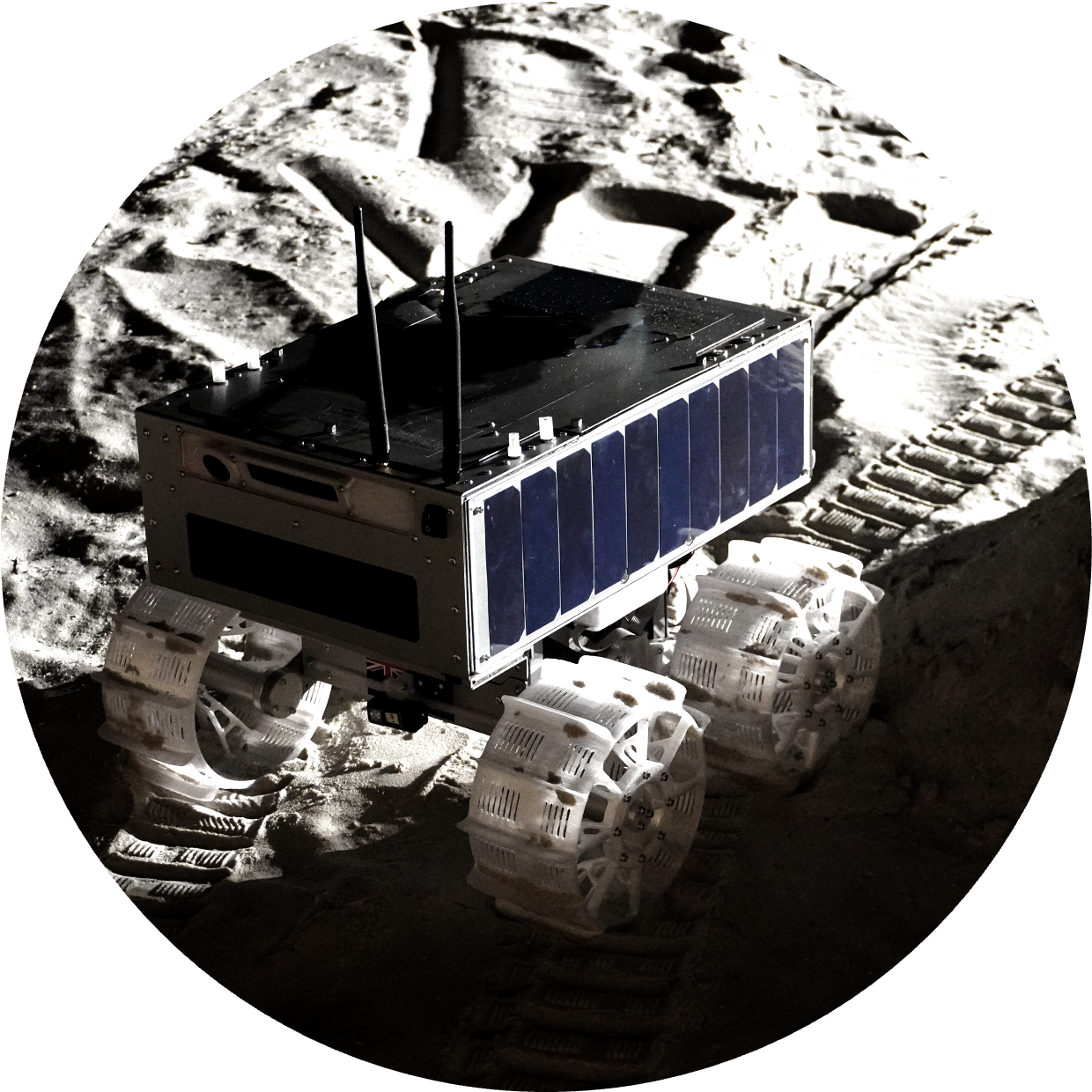
What’s special about the South Pole?
The lunar South Pole, which ROO-VER will explore, has some of the oldest and most stable geology in the solar system, and little has been explored.
The Mission so far…


How we test for the Moon?
Before Roo-ver can begin its mission, it must first withstand the intense vibration of launch. On the Moon, it will encounter challenging terrain in one-sixth of Earth's gravity and face extreme temperature shifts, moving from intense heat in direct sunlight to sudden cold in shadow.
To prepare for these conditions, we’re conducting testing across Australia, drawing on the expertise of our consortium partners to prototype, develop and evaluate Roo-ver’s capabilities under a range of demanding scenarios. This includes mobility trials over varied terrain, refinement of autonomous systems, and assessment of how each component responds to thermal, mechanical and environmental stress. All to ensure Australia’s rover is ready to roll on the Moon.